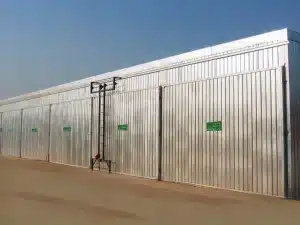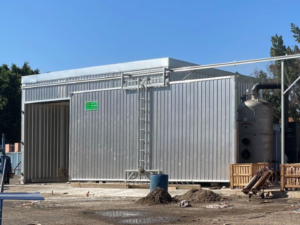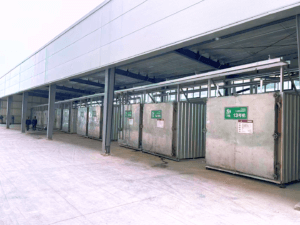
Kiln seasoning of timber is the controlled industrial process of reducing wood moisture content using a heated, humidity-regulated chamber — bringing green or partially air-dried timber to a target moisture content suitable for its end use.
Done correctly, kiln seasoning transforms structurally unstable green timber into dimensionally stable material that can be machined, glued, and finished with predictable results. Done incorrectly — or skipped entirely — the consequences show up later: warped furniture panels, gapping floorboards, failed glue joints, and rejected export shipments.
This guide covers how kiln seasoning plants work, what moisture content targets apply to different end uses, how to select the right plant for your species and volume, and what to watch for when drying tropical hardwoods common across South Asia and Africa.
What Is Kiln Seasoning of Timber?
Seasoning refers to the process of reducing the moisture content (MC) of freshly cut or partially dried timber to a level appropriate for its intended use. Kiln seasoning uses an enclosed chamber — a seasoning kiln or drying kiln — in which temperature, relative humidity, and airflow are actively controlled.
The term “kiln seasoning” is widely used across South Asia and East Africa, where it distinguishes controlled chamber drying from traditional air seasoning (stacking timber outdoors or in open sheds to dry naturally over months or years). The underlying process is identical to what North American and European manufacturers call “kiln drying.”
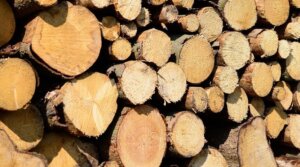
Green timber fresh from the sawmill typically contains 60–120% moisture content depending on species — meaning the water in the wood can outweigh the dry wood fiber itself. Most end uses require 8–15% MC. Closing that gap reliably and without causing checking, warping, or collapse is the core technical challenge of kiln seasoning.
Kiln Seasoning vs. Air Seasoning: Which Is Right for Your Operation?
Both methods reduce moisture content. The choice depends on your volume, species, target MC, and market requirements.
| Factor | Air Seasoning | Kiln Seasoning |
|---|---|---|
| Speed | Months to years depending on species and thickness | Days to weeks |
| MC control | Reaches local EMC only — typically 14–20% in humid climates | Achieves any target MC down to 6–8% |
| Documentation | None | PLC logs provide charge-by-charge MC records |
| Defect risk | High for tropical hardwoods — uncontrolled drying causes checking | Managed with correct schedule — lower defect losses |
| ISPM 15 compliance | Not achievable | Achievable with kilns certified for heat treatment protocol |
| Investment | Near zero (land, stickers, sheds) | $20,000–$200,000+ for industrial kiln |
| Operating cost | Near zero | Energy, maintenance, operator labor |
| Export market access | Limited — MC too high and undocumented | Full access to EU, US, and premium Asian markets requiring documented MC |
The practical threshold: Air seasoning makes sense for construction timber destined for local markets where 15–18% MC is acceptable. For furniture-grade hardwood, export shipments, engineered wood products, or any market requiring documented moisture content below 12%, kiln seasoning is the minimum standard — not an option.
In South Asia, the typical scenario for furniture and wood component manufacturers is partial air seasoning (3–6 months) followed by kiln seasoning to bring timber from 25–35% MC down to the target 8–12%. Pre-air drying before kiln loading reduces energy costs and drying time in the kiln.
How a Kiln Seasoning Plant Works
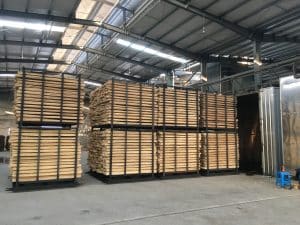
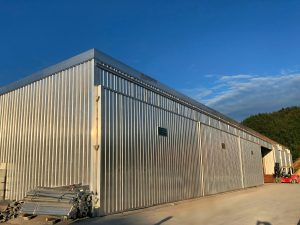
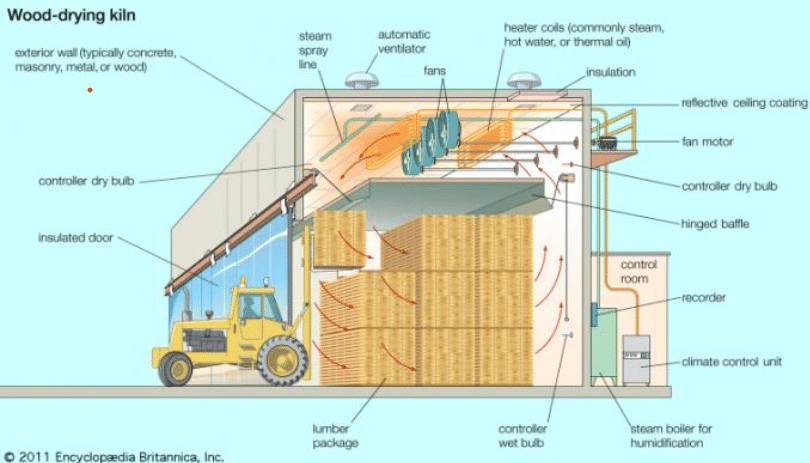
An industrial kiln seasoning plant — also called a wood seasoning machine or timber drying chamber — is an insulated enclosure equipped with heat sources, fans, venting systems, humidity controls, and a programmable logic controller (PLC) that manages all drying parameters according to a species-specific schedule.
Core Components
Insulated chamber structure: Constructed from aluminum alloy framing with mineral wool or polyurethane insulation panels. The chamber must maintain internal temperature without significant heat loss — insulation quality directly affects energy consumption.
Heating system: Conventional kilns use steam, hot water, or thermal oil piped through aluminum fin-tube heat exchangers inside the chamber. Electric heating elements are used in smaller or lower-temperature kilns. The heat source is typically a steam boiler, biomass boiler, or hot water generator external to the kiln.
Circulation fans: High-velocity reversible fans drive heated air through the timber stack at 2–5 m/s. Fan reversal is critical — reversing airflow direction every 2–6 hours ensures even drying across the full width of the stack, preventing the wet-side/dry-side gradient that causes uneven MC and casehardening.
Venting system: Motorized roof vents exhaust humid air from the kiln atmosphere and draw in drier outside air. The balance between heat input and venting controls relative humidity inside the chamber. Venting actuators are opened and closed by the PLC based on real-time humidity sensor readings.
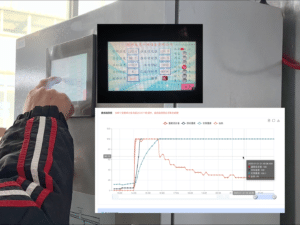
PLC control system and sensors: Dry-bulb and wet-bulb temperature sensors (or relative humidity sensors) monitor kiln atmosphere continuously. The PLC follows a pre-programmed drying schedule, adjusting heat input and vent position to maintain the target temperature and humidity at each stage of the schedule.
Wood moisture content sensors: Resistance-type in-kiln MC sensors embedded in sample boards track the actual moisture content of the timber as it dries. These allow the schedule to advance based on actual MC rather than elapsed time — important for tropical hardwoods where initial MC varies widely between charges.
The Drying Process: Stages of a Kiln Schedule
A kiln seasoning schedule is a step-by-step program defining the dry-bulb temperature and wet-bulb depression (or relative humidity) at each stage of drying, from initial loading to final equalization.
Stage 1 — Pre-heating / initial conditioning: The kiln is brought to the initial schedule temperature with high relative humidity (low wet-bulb depression). For sensitive tropical hardwoods — teak, rubber wood, acacia — the first stage is deliberately conservative to avoid creating a steep moisture gradient between the shell and core. A gradient that develops too quickly creates tensile stress at the surface, causing surface checks.
Stage 2 — Main drying: Temperature is raised and wet-bulb depression is increased in steps as the timber responds. The schedule pace is governed by what the species can tolerate — species with high extractive content (teak), high tension wood proportion (eucalyptus), or high density (merbau) require slower step progression than less refractory species.
Stage 3 — Equalization: When the wettest boards in the charge approach target MC, the schedule holds conditions to allow the drier boards to reabsorb slight moisture, narrowing the MC range across the charge. The target is a maximum 2–3% spread between the driest and wettest boards for furniture-grade timber.
Stage 4 — Stress relief / conditioning: A final high-humidity treatment at elevated temperature relieves casehardening — the residual stress state that develops when the outer shell dries and sets while the core is still wet. Without conditioning, casehardened timber springs when resawn, causing severe dimension variation in machined components.
Target Moisture Content by End Use
The correct target MC for kiln seasoning depends on the end use and the ambient relative humidity where the timber will be used in service. Wood in equilibrium with its surroundings stabilizes at the equilibrium moisture content (EMC) for those conditions.
Installing timber significantly above or below the local EMC results in dimensional movement, gap opening, or raised grain after installation.
The following targets are consistent with guidance in Simpson (1991) and the USDA Wood Handbook (2021), adapted for end-use conditions typical in South Asia and Southeast Asia:
| End Use | Target MC | Notes |
|---|---|---|
| Export furniture (EU, US, Japan markets) | 7–9% | Match destination EMC; document per charge |
| Domestic furniture (South Asia, humid climates) | 10–12% | Higher target reflects higher in-service humidity |
| Interior flooring / parquet | 6–8% | Tight tolerance; requires equalization stage |
| Structural timber (indoor) | 14–18% | Lower investment in drying; higher shrinkage risk |
| Wood packaging / pallets (ISPM 15 compliant) | Core ≥56°C for ≥30 min | MC < 30% typically achieved; temperature is the compliance criterion |
| Musical instruments / precision joinery | 6–8% | Species-specific; may require climate-controlled post-seasoning |
General commercial practice — documented in Simpson (1991) — is to kiln-season furniture and flooring timber to a slightly lower MC than the expected service condition, anticipating a moderate increase during processing and installation.
Kiln Seasoning of Tropical Hardwoods: Species-Specific Considerations
Tropical hardwoods common in South Asian sawmilling and furniture production are among the more demanding species to kiln-season. The schedules for teak, rubber wood, acacia, and sal differ significantly from temperate species — a hardwood kiln dryer must be capable of the precise temperature and humidity control these species require. Each has characteristics that make it prone to specific defects if the schedule is not matched to the species.
| Species | Initial MC | Target MC (Export) | Primary Risk | Kiln Time (25mm) |
|---|---|---|---|---|
| Teak (T. grandis) | 60–80% | 8–9% | End-checking | 7–12 days |
| Rubber Wood (H. brasiliensis) | 80–100% | 8–10% | Sapstain / blue stain | 5–8 days |
Teak (Tectona grandis)
Teak is moderately refractory and relatively forgiving compared to highly refractory tropical species, but its high silica and extractive content creates specific challenges:
- Moderate initial MC: Plantation teak typically arrives at 60–80% MC green; old-growth teak can be lower.
- Silica deposits: Dulls cutting tools and can interfere with electrical moisture meter readings. Verify with oven-dry samples for critical applications.
- Initial schedule: A conservative dry-bulb starting temperature of 45–50°C with minimal wet-bulb depression (2–3°C) for the first drying stage is appropriate for 25–38mm teak. Aggressive early temperature increase causes end-checking.
- Target MC: 10–12% for domestic furniture; 8–9% for export. Teak in-service in South Asian interiors typically equilibrates to 10–13% MC.
Rubber Wood (Hevea brasiliensis)
Rubber wood is the dominant furniture timber across South and Southeast Asia. It seasons well but has specific characteristics:
- High initial MC: Green rubber wood from young plantations (typically 20–25 years at harvest) runs 80–100% MC.
- Sapstain susceptibility: Must be sawn and moved to the kiln or treated with anti-stain solution quickly. Delay between sawing and kiln loading causes blue stain degrade.
- Seasons readily: Less refractory than teak; responds well to standard medium-severity schedules. A dry-bulb of 55–60°C is achievable at mid-schedule without causing checking in 25mm boards.
- Target MC: 8–10% for furniture; rubber wood is the primary species for flatpack furniture export from South and Southeast Asia, where export markets require documented MC.
Acacia (Acacia mangium, Acacia auriculiformis)
Planted extensively across South and Southeast Asia for furniture timber and pulpwood:
- Prone to collapse: Acacia, particularly A. mangium, is susceptible to cell collapse at elevated early drying temperatures. Collapsed cells cause severe distortion and internal honeycomb — irreversible degrade.
- Critical first stage: Initial dry-bulb temperature should not exceed 40–45°C with relative humidity above 85% until surface MC drops below 30%. Only then increase temperature incrementally.
- Reconditioning typically required: Casehardening is common in acacia. Factor in a reconditioning stage — elevated temperature and humidity — at the end of the schedule.
- Target MC: 9–12% depending on end use.
Sal (Shorea robusta) — Northeast India and Nepal
Sal is a heavy, dense hardwood used extensively in construction and furniture across northern India and Nepal:
- Very slow drying: High density and fine texture mean moisture migrates slowly. Thick stock (50mm+) may require 6–10 weeks in the kiln.
- Prone to surface checking: Requires a very low wet-bulb depression in the early stages — do not exceed 2°C depression until MC drops well below 30%.
- Air predrying strongly recommended: Bring green sal to 30–35% MC by air before kiln loading. Attempting to kiln-dry from green is time-consuming and defect-prone.
Types of Kiln Seasoning Plants for Industrial Operations
Conventional Steam or Hot-Water Kiln
The industry standard for operations processing more than 30–40 m³ per charge. A steam boiler or biomass hot-water boiler generates heat delivered to the kiln via aluminum fin-tube heat exchangers. High-velocity reversible fans drive the heated air through the timber stack. Tech Drying’s conventional wood drying kilns range from 10–200 m³ per charge and support steam, hot water, thermal oil, and electric heating.
Best for: Mixed species operations; high volume sawmills; facilities that already have or can install a boiler; lowest cost per m³ at scale.
Capacity range: 10–300 m³ per charge
Heating options: Steam, hot water, thermal oil, or electric
Drying time for 25mm teak: 7–12 days from 60% initial MC to 10% target
Dehumidification (Heat Pump) Kiln
Instead of venting humid air out through roof vents, a dehumidification kiln uses a refrigerant-based heat pump to condense moisture from the kiln atmosphere. The condenser coil returns heat to the chamber; condensed water drains away. No external heat source — only electricity. See Tech Drying’s heat pump dehumidification kiln for specifications.
Best for: Smaller operations (under 30–40 m³), locations where electricity costs are moderate and boiler installation is not practical, or where water consumption is a concern.
Drawback: Drying cycle is typically 20–40% slower than a conventional kiln for the same species and thickness. Lower maximum temperature limits — most dehumidification kilns are limited to 55–60°C, which restricts their use for heat treatment/ISPM 15 compliance.
Comparison: Conventional vs. Dehumidification Kiln
| Factor | Conventional Kiln | Dehumidification Kiln |
|---|---|---|
| External heat source required | Yes (boiler) | No — electricity only |
| Max operating temperature | 80–100°C | 55–60°C |
| Drying speed | Faster | 20–40% slower |
| Energy recovery | Lower (venting exhausts heat) | Higher (heat pump recovers latent heat) |
| ISPM 15 compliance | Yes (with correct temp) | Generally not (temp too low) |
| Suitable capacity | 10–300 m³ | Up to 40–50 m³ |
| Capital cost | Higher (boiler required) | Lower (no boiler) |
Common Kiln Seasoning Defects and How to Prevent Them
Getting the schedule right is as important as having the right equipment. Five defects account for the majority of degrade losses when seasoning tropical hardwoods in South Asia:
Surface checking: Splits at the surface caused by too-aggressive early drying. Prevention: start with a conservative dry-bulb temperature and high relative humidity; end-seal timber ends before loading.
Casehardening: The outer shell dries and sets in compression while the core is still wet, causing machined components to spring when resawn. Prevention: always include equalization and conditioning stages at the end of the schedule.
Collapse: Irreversible cell structure failure in acacia and eucalyptus when heat is applied before the surface has stabilised. Prevention: extremely conservative first-stage temperature — do not rush early drying.
End checks: Splits at board ends from rapid end-grain moisture loss. Prevention: apply paraffin wax or commercial end-grain sealer before kiln loading.
Sticker shadow: A stripe of higher MC where stickers restricted airflow. Prevention: use straight, dry stickers of uniform thickness (19–25mm), aligned vertically across the full stack height.
For a full analysis of causes, schedule adjustments, and remedies, see Stop Wood Cracking & Warping: 5 Expert Drying Strategies.
Selecting the Right Kiln Seasoning Plant for Your Operation
Before requesting a quote, establish the following:
-
Species and initial MC: Your primary species determines schedule requirements, drying time, and kiln temperature range. Rubber wood and acacia are different problems from teak and sal.
-
Target MC and end use: Furniture-grade 8–10% requires different equipment capability from structural timber at 15–18%.
-
Volume: Size the kiln to your charge volume, not your theoretical daily throughput. A 50 m³ kiln at 80% utilization outperforms a 100 m³ kiln sitting half-empty most of the time.
-
Heat source: Do you have a biomass or steam boiler? Access to low-cost biomass fuel? If yes, conventional kiln. If electricity is your only realistic energy source for a small operation, dehumidification kiln.
-
Export requirements: If ISPM 15 heat treatment compliance is part of your market, verify the kiln reaches and holds ≥56°C at the core of the thickest piece. This requires temperature-rated conventional kilns with core temperature logging — not dehumidification kilns.
-
After-sales support: Kiln equipment is only part of the investment. The drying schedule database, operator training, and remote technical support determine whether the kiln produces quality results or accumulates defect losses. Ask any supplier what schedules they provide for your specific species, how they are delivered, and what support is available when a charge goes wrong. Our buying guide for industrial lumber kilns covers the 12 questions to ask before purchasing.
For pricing and capacity planning, the industrial lumber kiln price guide provides a full cost breakdown by component and kiln type.
Tech Drying's Kiln Seasoning Plants
Tech Drying has designed and commissioned kiln seasoning plants for sawmills and furniture manufacturers across South Asia, Southeast Asia, and Africa since 1999 — over 27 years of wood drying equipment design and export. Our conventional wood drying kilns range from 10 m³ to 200 m³ per charge, with heating options for steam, hot water, thermal oil, and electricity. View our full product range or read case studies from Bangladesh, Kenya, and Gabon.
Every kiln installation includes:
- Species-specific drying schedules for your primary timber — including teak, rubber wood, acacia, eucalyptus, pine, and other regional species
- Operator training covering schedule management, defect recognition, and moisture content measurement
- Remote monitoring support via our PLC control system, allowing our engineers to review kiln data and assist with schedule adjustments from Hangzhou
Our plants are in operation across India, Bangladesh, Myanmar, Malaysia, Indonesia, and East Africa, where our engineers have first-hand experience with the specific challenges of drying tropical plantation species under humid climatic conditions.
Get a quote or schedule consultation: Contact our technical team to discuss your species, volume, and target MC. We’ll recommend a plant configuration and provide schedule references for your primary timber.
Conclusion
Kiln seasoning of timber is the foundation of consistent, export-grade wood quality. Whether you are processing teak for furniture, rubber wood for flatpack components, or acacia for domestic markets, the principle is the same: controlled reduction of moisture content through a species-matched schedule, in a well-engineered kiln. The right plant — sized to your volume, matched to your heat source, and supported with proper drying schedules — eliminates the degrade losses and dimensional instability that come with air seasoning alone. Tech Drying has built and commissioned kiln seasoning plants across South Asia, Southeast Asia, and Africa for over 27 years. Contact our technical team to discuss your species, capacity, and target MC.
Kiln Seasoning of Timber: Frequently Asked Questions
What is the difference between kiln seasoning and kiln drying?
There is no technical difference. “Kiln seasoning” is the term widely used in South Asia (India, Bangladesh, Pakistan, Sri Lanka) and parts of East Africa. “Kiln drying” is the standard term in North America and Europe. Both refer to the same process: controlled reduction of timber moisture content in a heated, humidity-regulated chamber.
What moisture content should timber reach after kiln seasoning?
It depends on the end use. Export furniture typically requires 7–9% MC; domestic furniture in South Asia, 10–12%; interior flooring and parquet, 6–8%; structural timber for indoor use, 14–18%. The target should match the equilibrium moisture content (EMC) of the environment where the timber will be used in service.
How long does kiln seasoning take?
Drying time varies by species, board thickness, and initial moisture content. As a general guide: 25mm rubber wood from green to 9% MC takes approximately 5–8 days in a conventional kiln; 25mm teak to 10% MC takes 7–12 days; 50mm dense hardwoods (sal, merbau) can take 4–8 weeks. Pre-air drying to 25–35% MC before kiln loading significantly reduces total kiln time. See our full drying time guide for species-specific estimates.
Can a kiln seasoning plant be used for ISPM 15 heat treatment?
Yes, with conditions. ISPM 15 requires that wood core temperature reaches ≥56°C for a minimum of 30 continuous minutes. Conventional steam or hot-water kilns with core temperature logging can achieve and document this. Most dehumidification kilns cannot reach the required temperature. See our ISPM 15 heat treatment kilns for dedicated heat treatment equipment.
What is the best kiln seasoning plant for rubber wood furniture production?
For rubber wood at volumes above 30 m³ per charge, a conventional steam or hot-water kiln with PLC control and reversible fans is the standard choice. Rubber wood seasons readily and tolerates moderate schedule severity — a well-programmed kiln can process 25mm boards to 8–10% MC in 5–8 days. For smaller operations or where no boiler is available, a dehumidification kiln is a practical alternative. Contact our engineers for a recommendation based on your capacity and energy setup.
References
- Simpson, W.T. (1991). Dry Kiln Operator’s Manual. USDA Forest Service, Forest Products Laboratory. Agriculture Handbook AH-188.
- Forest Products Laboratory. (2021). Wood Handbook: Wood as an Engineering Material. General Technical Report FPL-GTR-282. Madison, WI: USDA Forest Service, Forest Products Laboratory. Ch. 13: Drying and Control of Moisture Content.
- Bureau of Indian Standards. (1993). IS 1141: Seasoning of Timber — Code of Practice. New Delhi: BIS.
- Boone, R.S., Kozlik, C.J., Bois, P.J., Wengert, E.M. (1988). Dry Kiln Schedules for Commercial Woods: Temperate and Tropical. USDA Forest Products Laboratory. FPL-GTR-57.